Features
- Build your own dataset from live camera input
- Train a deep learning model with just few gestures
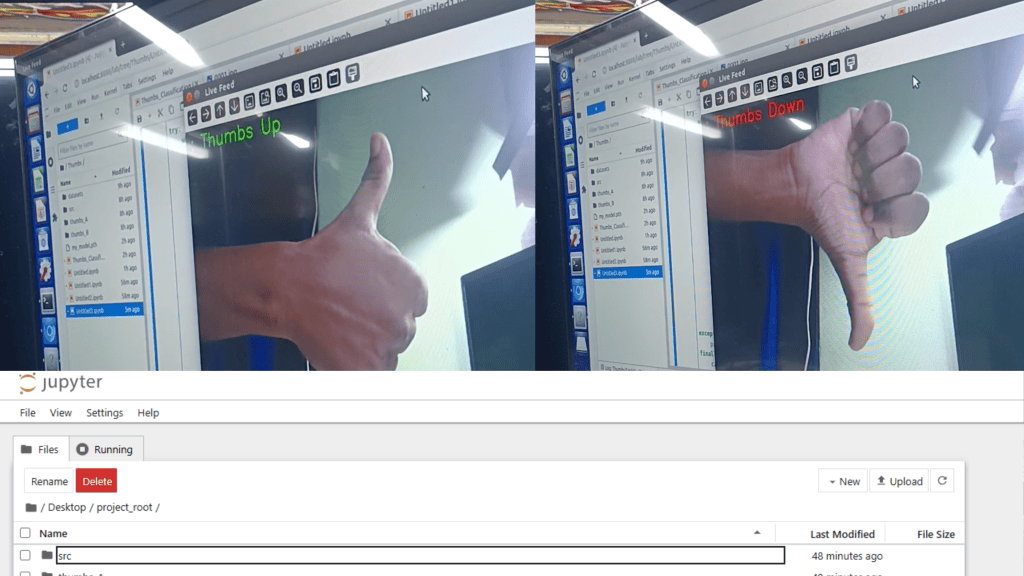
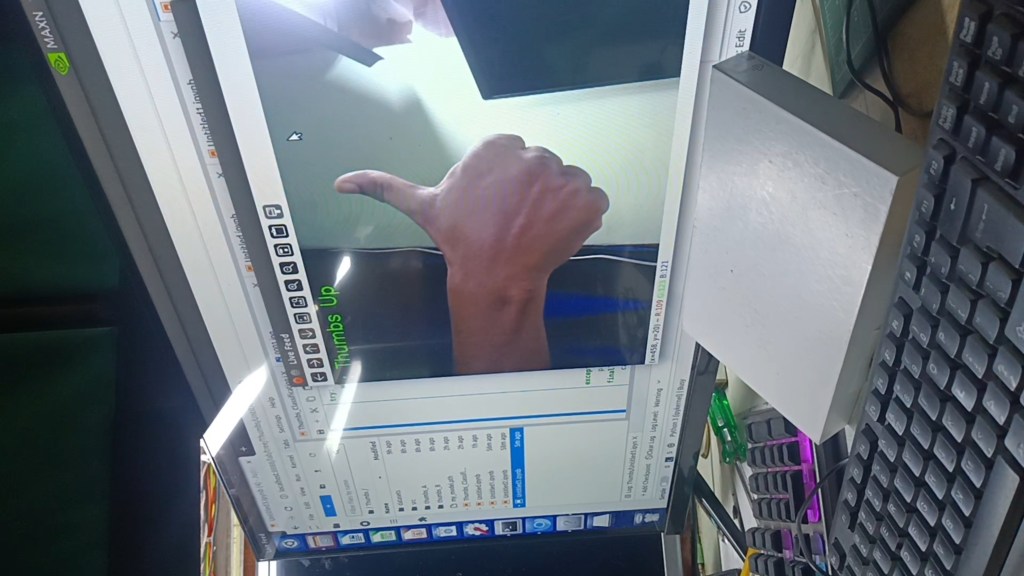
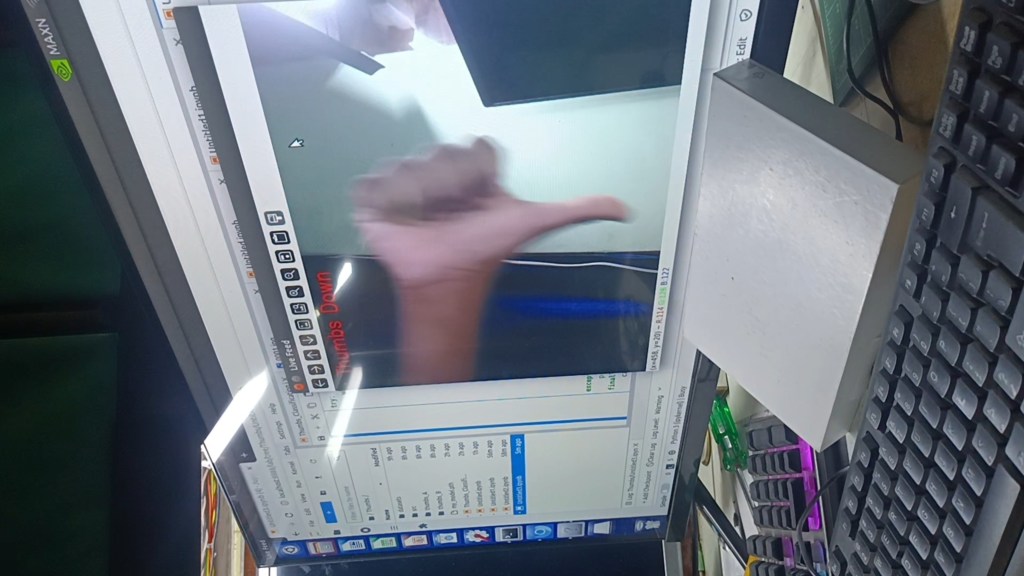
- Real-time classification (Thumbs-Up / Thumbs-Down)
- Works on Jetson Nano, Windows, macOS, and Linux
- You can extend the model to detect other gestures
Components Used
- Jetson Nano , for edge inference
- Python
- Jupyter Notebook / JupyterLab
- PyTorch / Torchvision, deep learning
- OpenCV, camera integration
- Pillow (PIL), image handling
- NumPy, data processing
Learning Milestones (What this repo teaches you)
- Creating custom datasets directly from camera feed
- Training a CNN / image classifier using PyTorch
- Working with OpenCV for real-time camera capture
- Data preprocessing (resize, normalization, transform pipelines)
- Saving and loading model weights
- Running real-time inference with webcam on Jetson Nano
Working
Working
Code & Installation
The complete source code is available in the GitHub repository.
My Learnings
- How to capture and store dataset folders programmatically
- How to train custom image classification models using PyTorch
- How to manage train/test notebooks effectively
- Using OpenCV to connect camera for live inference
- Understanding transforms (resize, normalize, tensor conversion)
- How ML models react to small datasets + augmentation techniques
- Running trained models on Jetson Nano’s GPU accelerated PyTorch
- This project helped me connect the dots between data → training → model → inference.