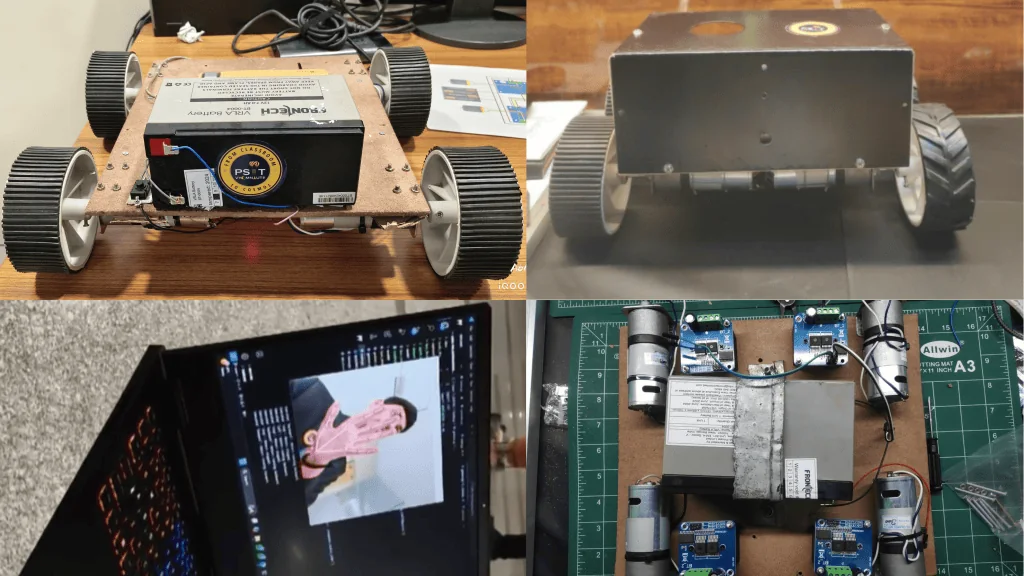
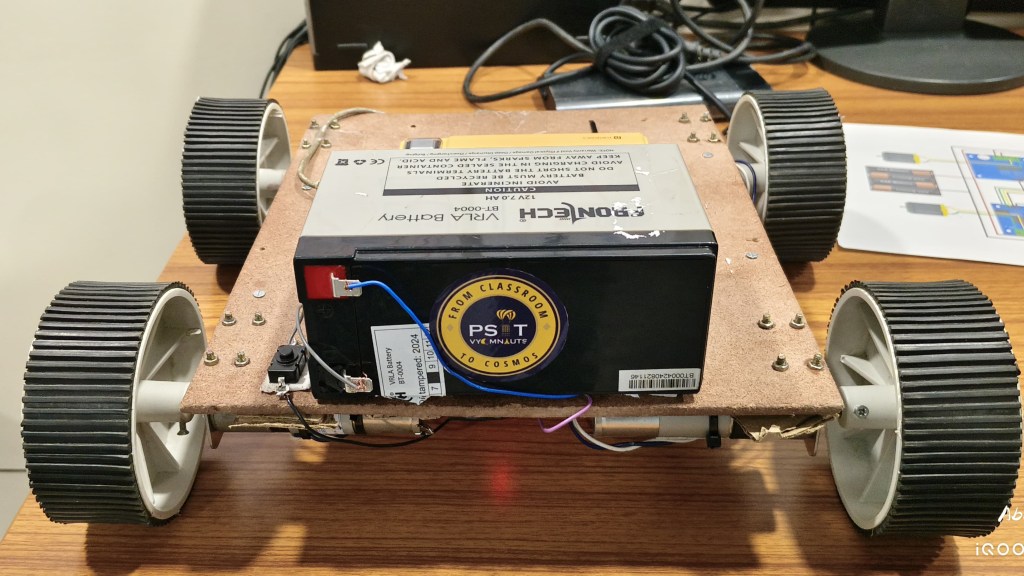
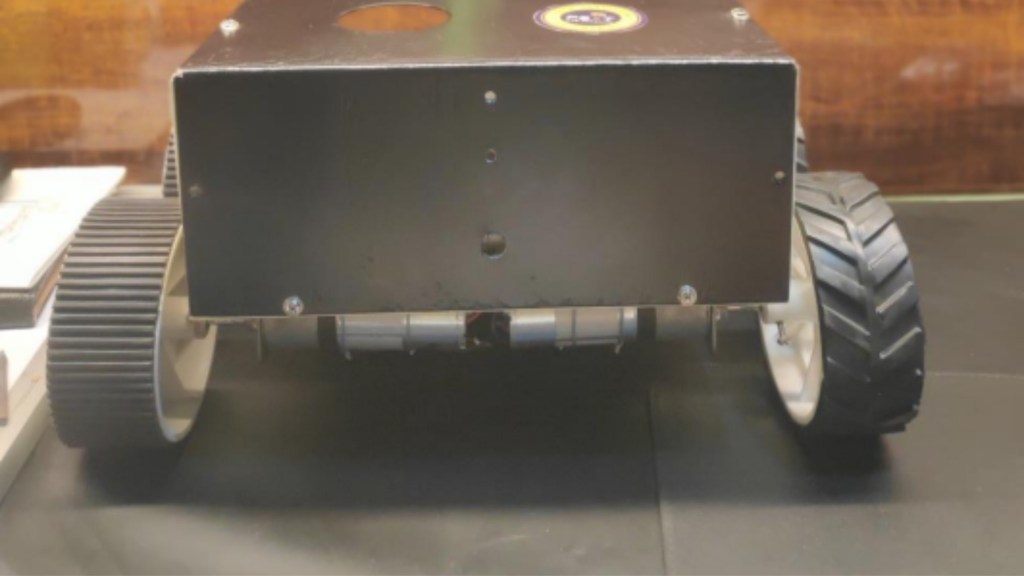
Features, Prototype 2
- Voice control using Vosk (offline speech recognition)
- Gesture control using hand-gesture recognition
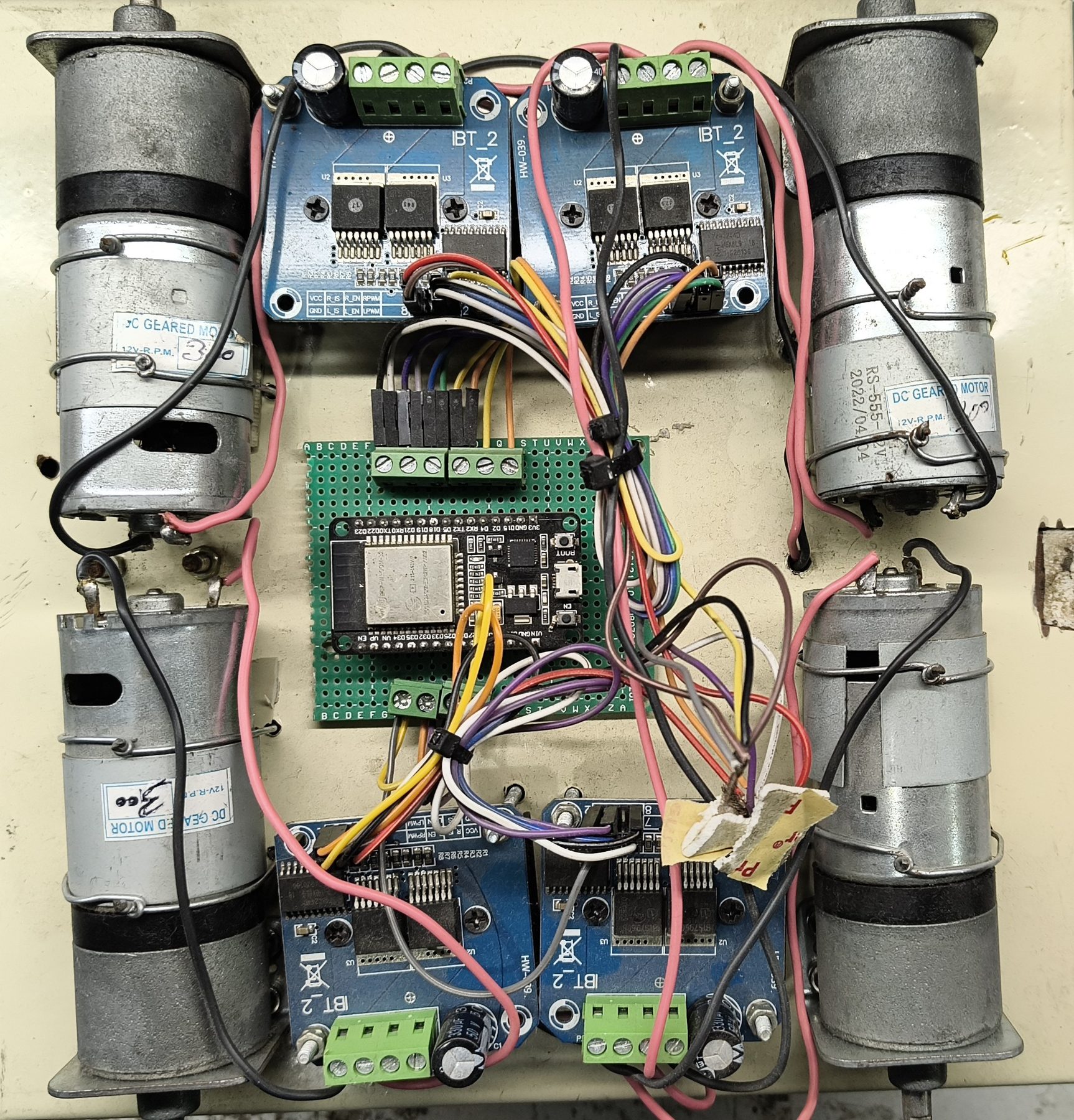
- Motion handled by ESP32 + BTS7960 + Johnson motors
- Commands sent from laptop via HTTP requests
Components Used, Prototype 2
- Johnson Motors (higher torque than V1)
- BTS7960 Motor Drivers (high current capable)
- ESP32 (motion control through HTTP)
- Cardboard chassis (temporary body)
- 12V 7A battery + Powerbank
Limitations, Prototype 2
- ❌ Cardboard chassis couldn’t handle the weight and started bending
- ❌ Needed stronger structure to mount all electronics securely
- This mechanical limitation led to Prototype 3.
Features, Prototype 3
- Upgrades from P2 ➝ P3
- ✅ Replaced cardboard chassis with metal chassis
- ✅ Kept Voice + Gesture controls
- Added:
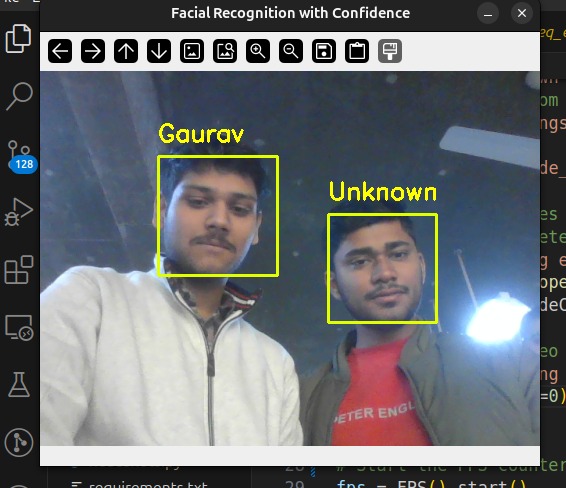
- ✅ Face Authentication (restricted access)
- ✅ YOLO Object Detection
- ✅ Object Find & Stop
- Robot scans surroundings → finds target → moves toward it → stops near object
Components Used, Prototype 3
- Hardware
- Metal Chassis (rigid, stable, load-bearing)
- Johnson Motors + BTS7960 Motor Drivers
- ESP32 (handles commands & motor control)
- Laptop (Intel i9 + RTX 4060 GPU), runs YOLO, gesture, voice, face recognition
- 12V battery + powerbank
- Software / AI
- Vosk (offline speech recognition)
- OpenCV + Gesture Recognition
- YOLO (object detection)
- HTTP command interface
Performance, Prototype 3
- ✅ Metal chassis carried the full load, battery and electronics mounted securely, no bending
- ✅ Johnson motors + BTS7960 + ESP32 with voice & gesture control fully functional
- ✅ No failure, the prototype worked successfully
- Development moved on because wheeled robots can’t handle uneven terrain → upgrade to the quadruped Vaman v3
Media Availability (Important Note)
This project was built a long time ago.
There are very limited photos/videos of the working system
Working
Voice Controlled
Gesture Controlled
Making and Working
Code & Installation
The partial source code for this prototype is available in the GitHub repository.
My Learnings
- Cardboard chassis is only suitable for low-load testing
- Mechanical design matters as much as electronics
- ESP32 + laptop (AI brain) = more reliable than Jetson doing everything
- Multi-modal control (Voice + Gesture + Object AI) can run together smoothly