Project Overview
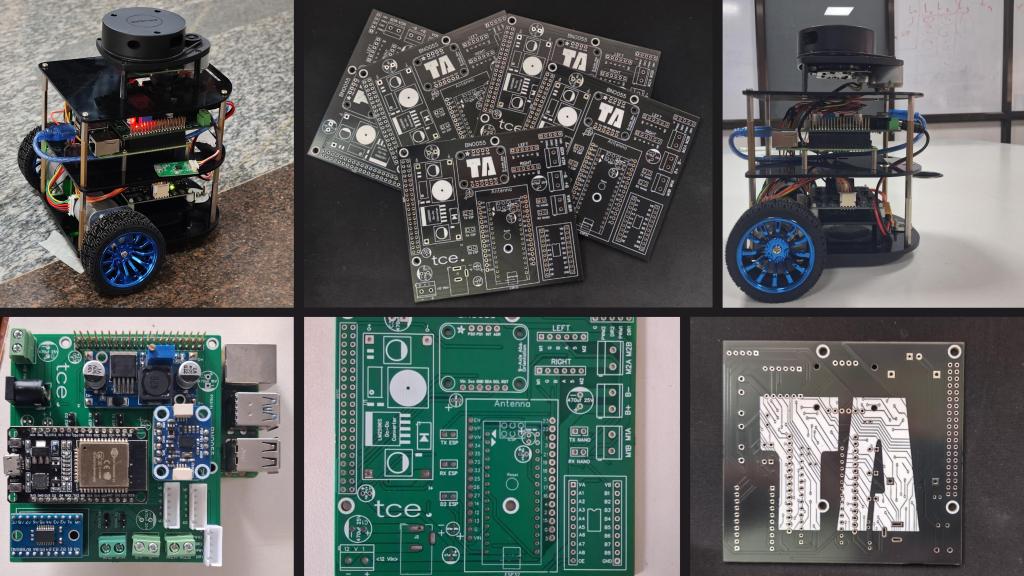
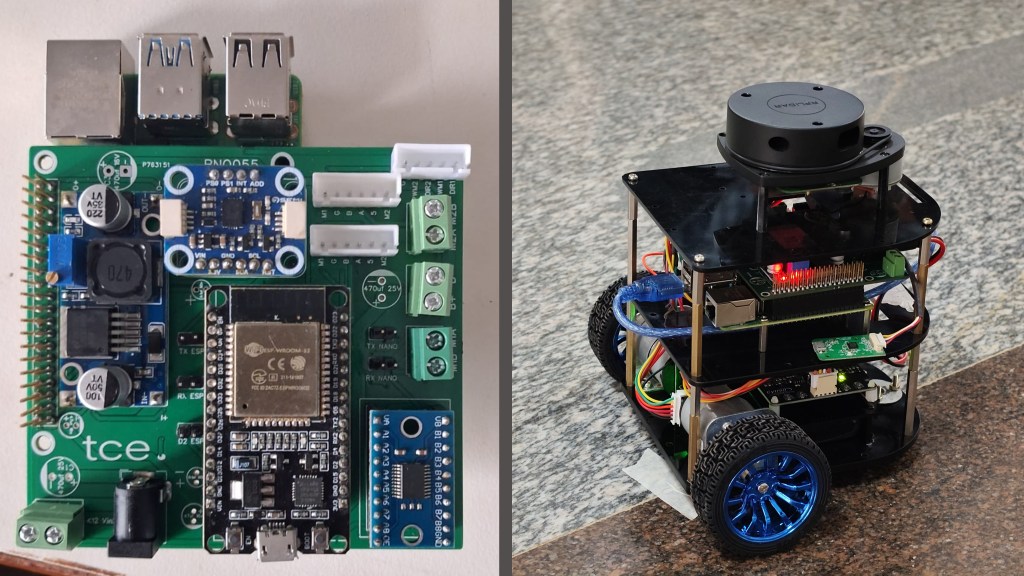
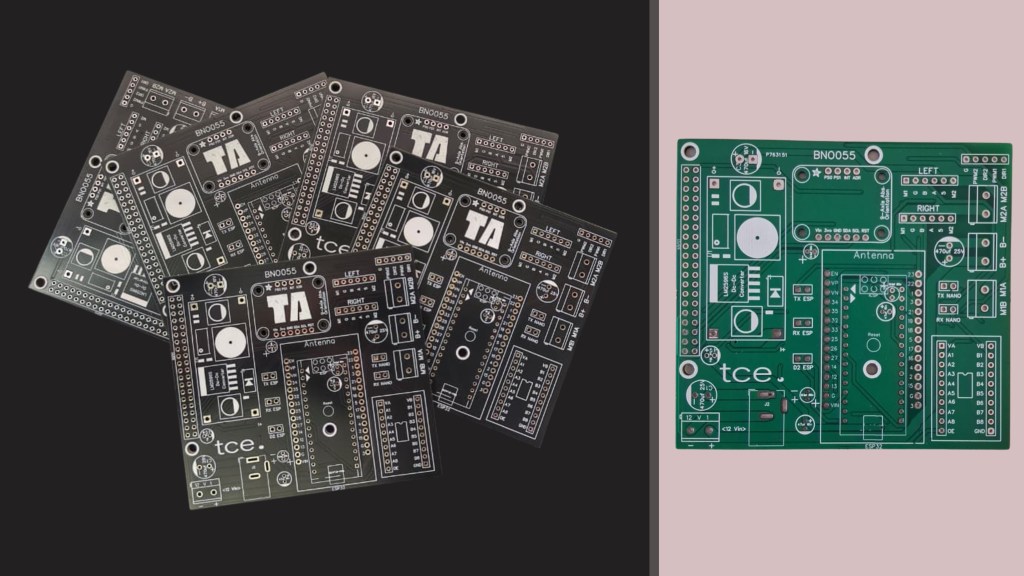
The objective of this PCB was to create a compact and modular control system that works as a Raspberry Pi HAT, allowing seamless integration between the Raspberry Pi, motor drivers, sensors, and power modules required for the Turtle Bot.
Instead of using multiple separate modules with messy wiring, this PCB simplifies the entire setup by bringing all essential connections onto a single board.
Hardware Architecture
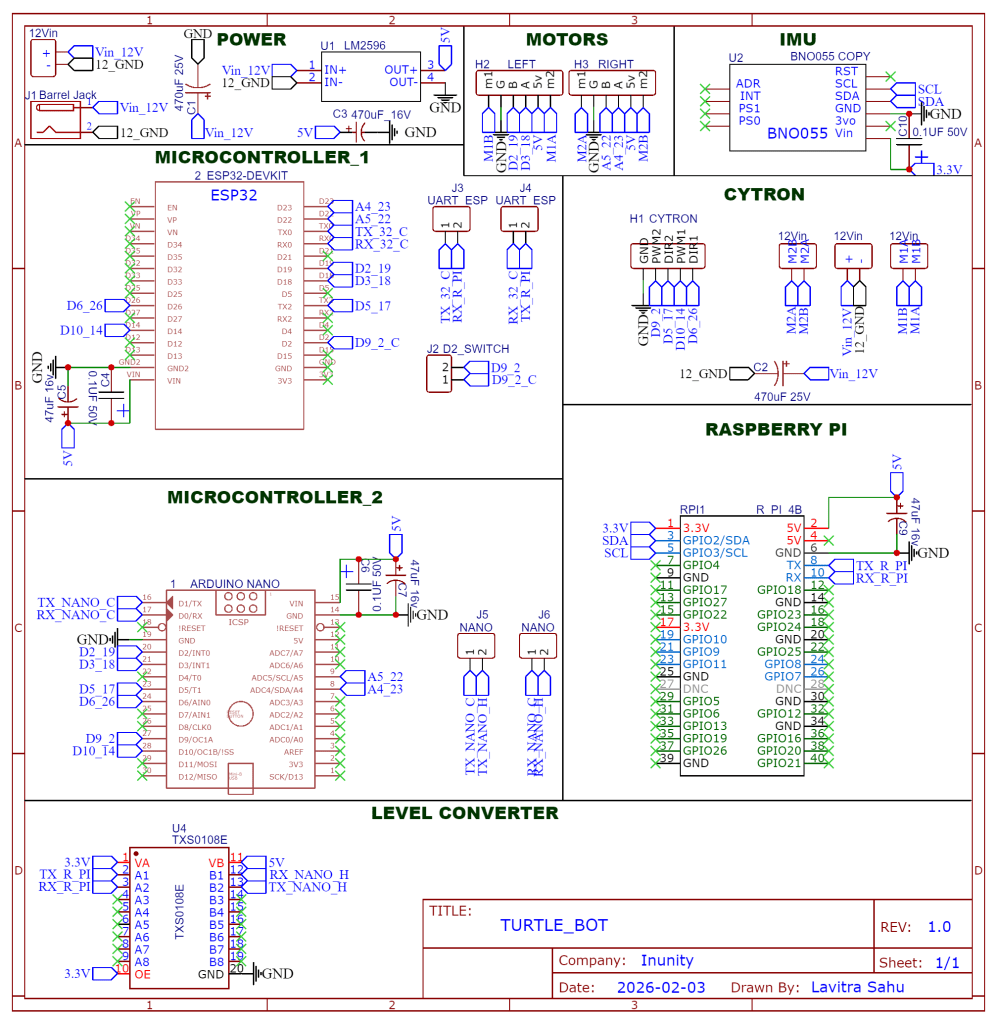
The PCB supports the following components:
| Component | Function |
| Raspberry Pi | Main processing unit for running robot logic, navigation, and higher-level tasks |
| ESP32 / Arduino Nano | Optional microcontroller support for low-level control tasks |
| Cytron Motor Driver | Controls DC motors used for robot movement |
| BNO055 IMU Sensor | Provides orientation and motion sensing |
| Level Converter | Handles communication between different voltage levels |
| Buck Converter | Regulates battery voltage for stable power supply |
| Battery Input | Powers the entire robot system |
| JST Connectors | Provides clean and reliable external connections |
| Capacitors | Ensures power stability and noise filtering |
Key Feature
One of the major features of this PCB is its flexibility in microcontroller selection.
Users can choose between:
- ESP32
- Arduino Nano
depending on their project requirements.
They simply need to:
- Attach the PCB HAT to the Raspberry Pi
- Connect either an ESP32 or Arduino Nano
- Connect motors
- Connect battery supply
Attach sensors and supporting modules
This makes the system modular and easy to maintain.
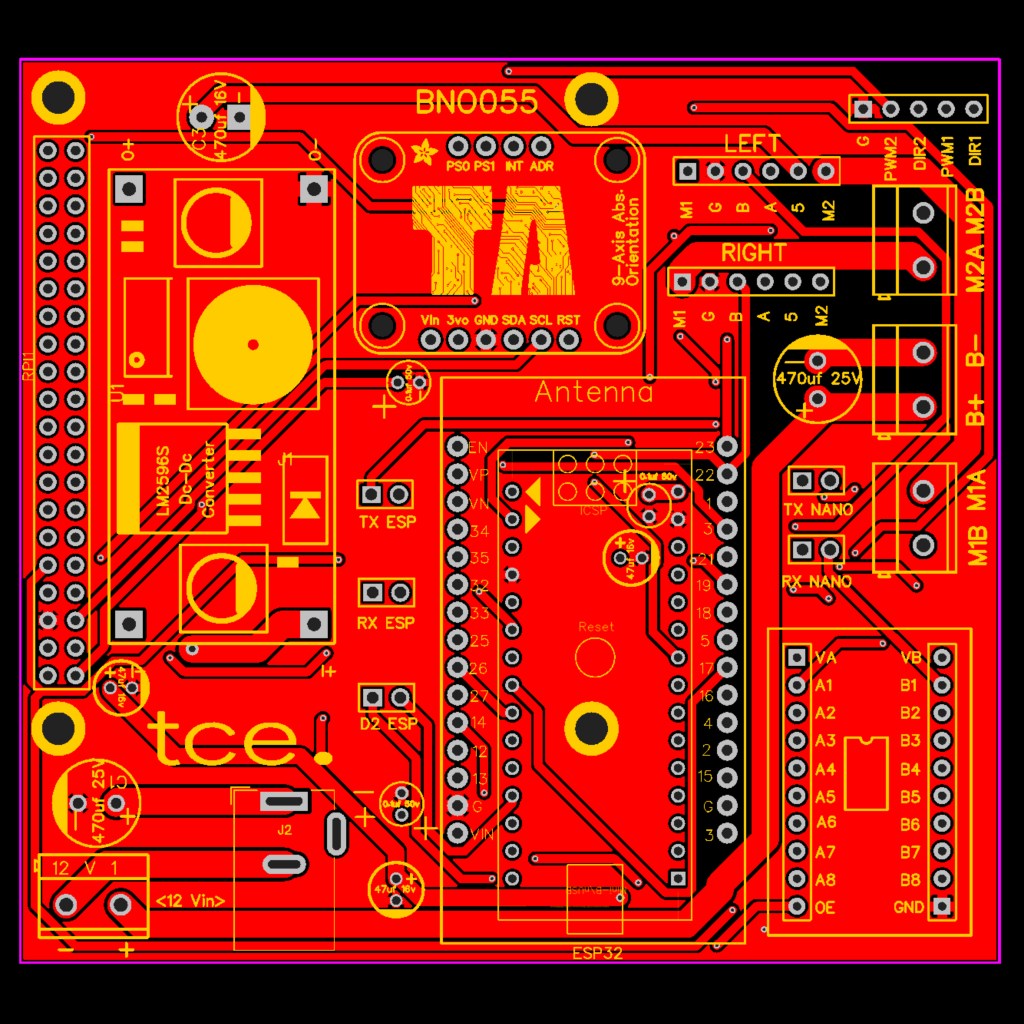
Diagrams
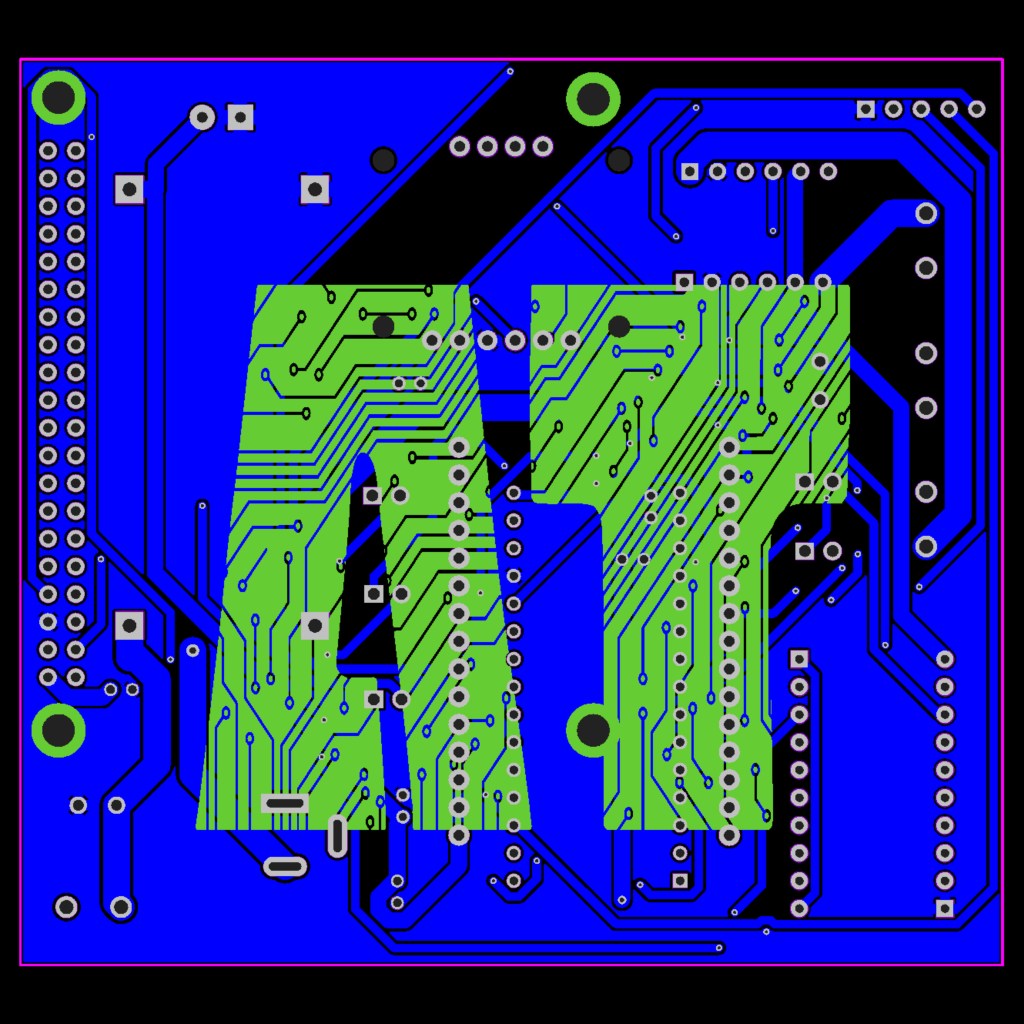
PCB Design Goal
The main goal behind this design was to:
- Reduce complex wiring
- Create a cleaner robotics hardware setup
- Improve modularity
- Make hardware integration easier
- Enable quick replacement of modules
My Learnings
- Learned how to design a custom Raspberry Pi HAT PCB
- Improved schematic design and PCB routing skills
- Understood motor driver integration
- Learned power distribution design using buck converters
- Worked with sensor integration (BNO055)
- Improved connector planning using JST connectors
- Learned how to make modular robotics hardware systems
Team Collaborators
- Robot Development & Hardware Integration: Anirudh
- PCB Design: Lavitra Sahu