Features
- 16-Channel Relay Control
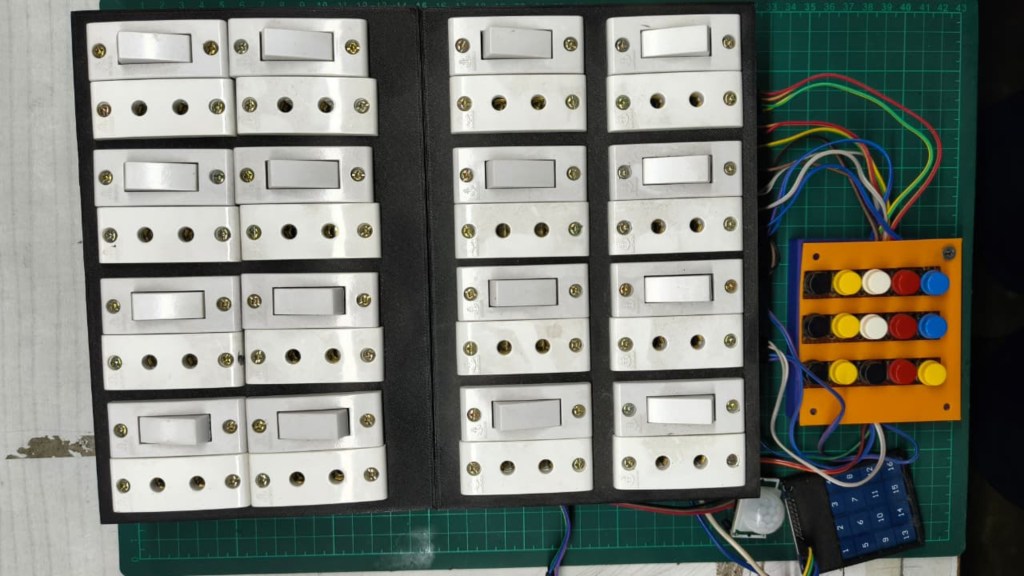
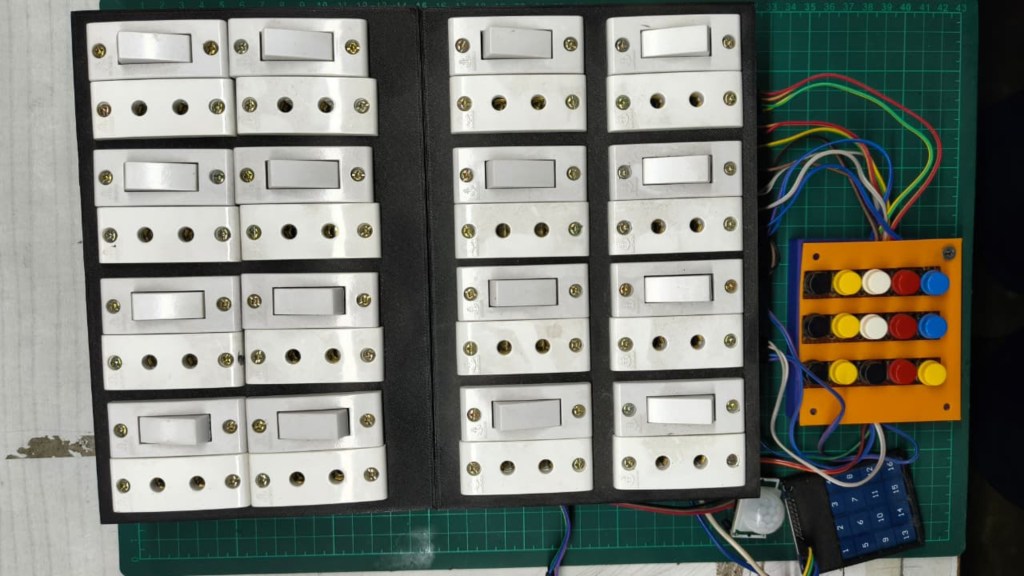
- Each relay is connected to a 3-pin AC plug point for direct appliance control.
- Four Control Methods
- Manual Control using push buttons
- Touch Control using capacitive touch pads
- Auto Mode using PIR motion sensor
- Remote IoT Control using Blynk App (Internet-based)
- Voice Control Automation
- Commands like: “Turn on fan plug 3” or “Switch off plug 7”
- Blynk IoT Integration
- Control all 16 appliances from anywhere using smartphone
- Real-time status monitoring in app
- GPIO Expansion with Multiplexers
- Used PCF8575 + PCF8574 expanders to handle high I/O count
- Enables ESP32 to manage multiple inputs for touch, push buttons, and relays
- Failsafe Manual Override
- Even if WiFi or the app fails, touch buttons & manual switches continue working
Components Used
- ESP32, Main controller with Wi-Fi for Blynk IoT
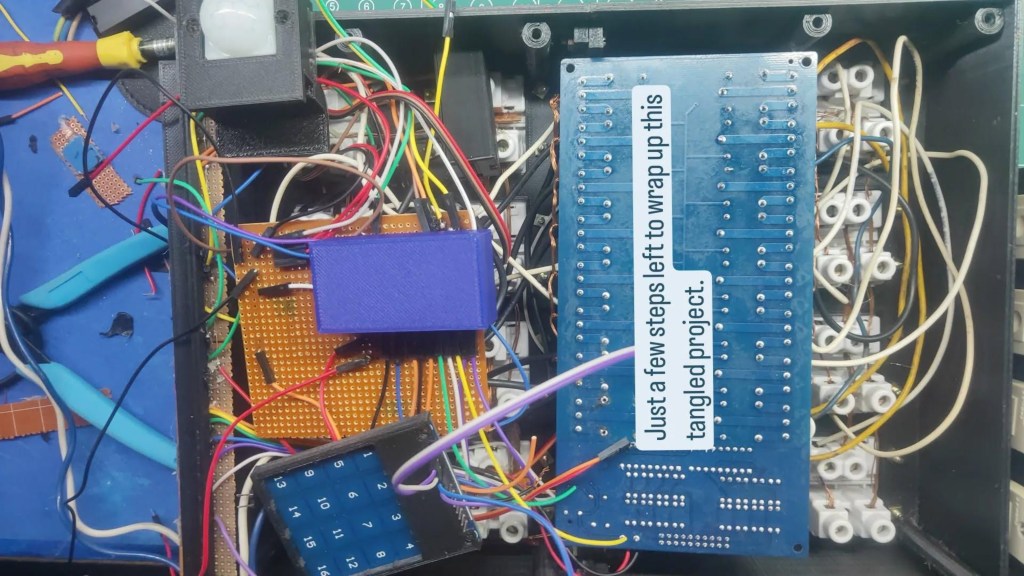
- 16-Channel Relay Board, Controls AC appliances
- PCF8575 + PCF8574 I/O Expanders, Increase GPIO count
- Blynk IoT App, Smartphone control via cloud
- Voice Assistant Integration (third-party app)
- PIR Motion Sensor, Auto light/appliance activation
- TTP229 16-Way Capacitive Touch Switch Digital keypad Module, Touch-based on/off control
- Mechanical Push Buttons, Manual control / failsafe override
- 3-Pin Plug Sockets (16 pcs), Individual relay output connections
- Power Supply, To power ESP32 & relay module
How it Works
- Inputs from touch buttons, push buttons, and PIR sensor are read via I/O expanders.
- ESP32 receives commands from Blynk app over Wi-Fi.
- ESP32 triggers the appropriate relay on the 16-channel board.
- Each relay switches an AC plug point → appliance ON/OFF.
- Voice commands are sent locally to ESP32 using its IP address.
- All three control systems (manual + touch + Blynk IoT) work simultaneously.
Media Availability (Important Note)
This project was built a long time ago.
There are very limited photos/videos of the working system
Achievement
This project was showcased in a college project competition, along with other projects.
Won 2nd place and received ₹25,000 cash prize.
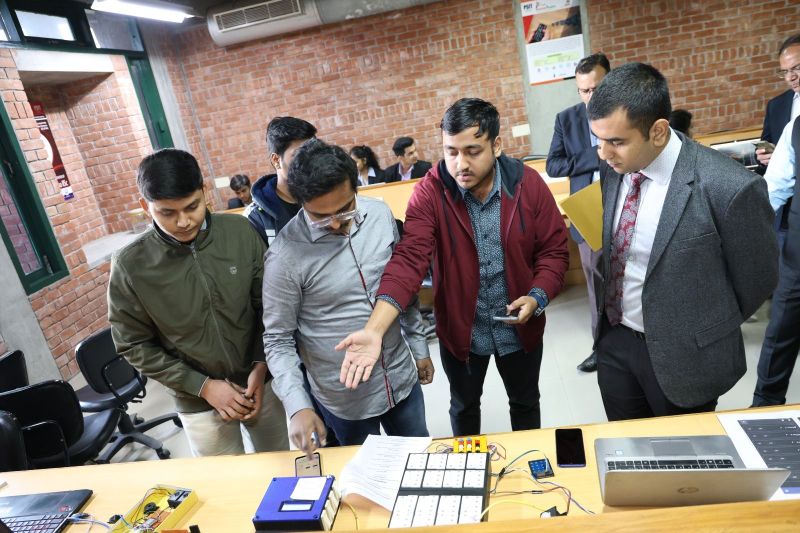
Showcasing Our Project
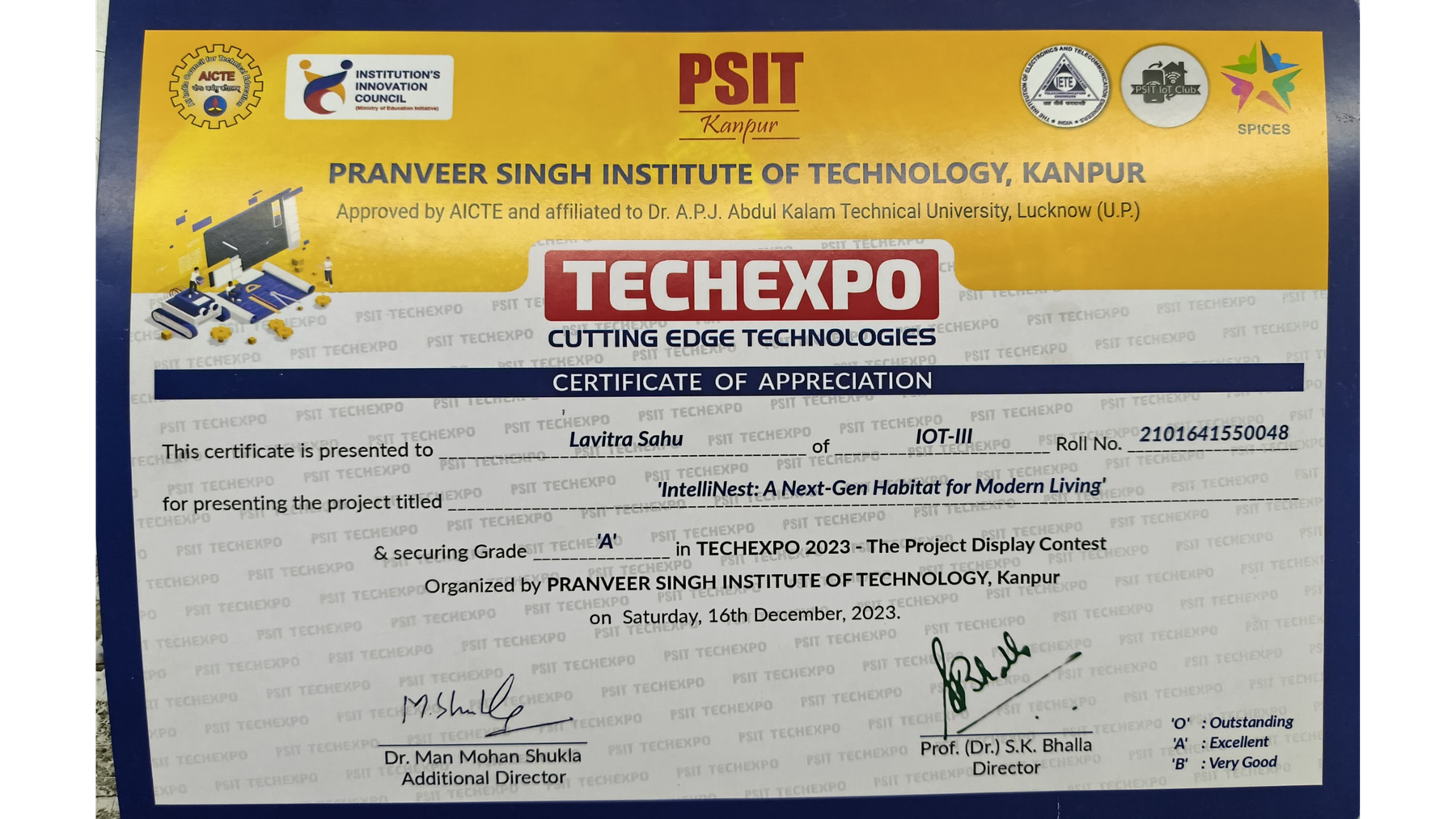
Certificate
Working
Voice Automation (Insta Highlight)
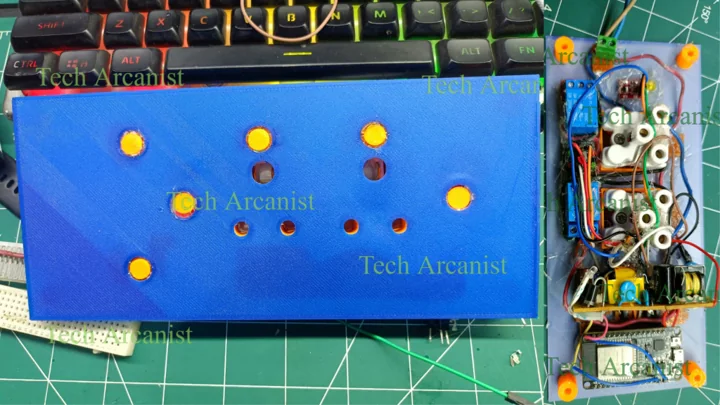
Old Working Progress Snaps
Old Working Progress Snaps
Circuit
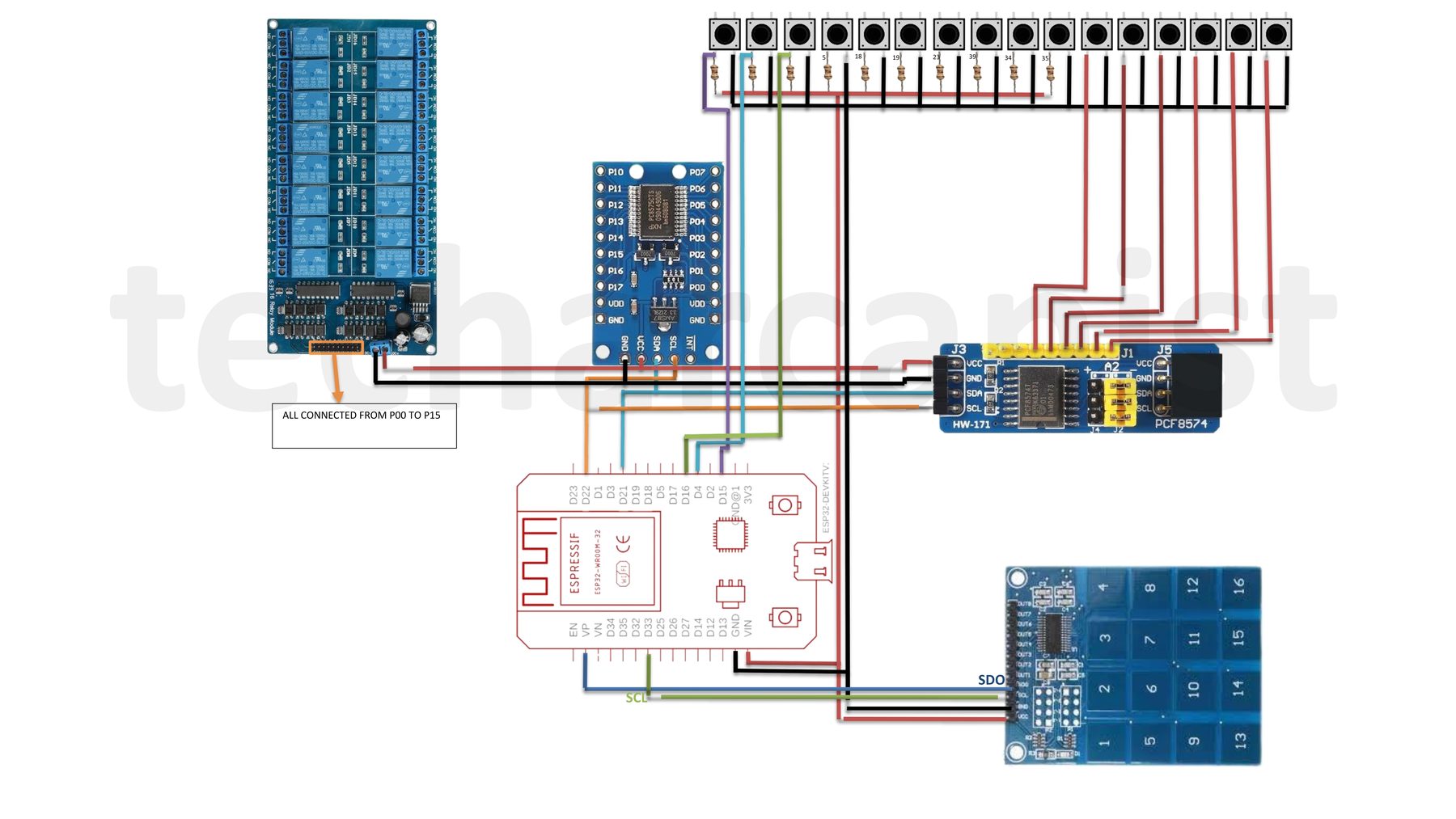
Circuit Diagram
My Learnings
- How to expand GPIO pins using PCF8575 and PCF8574 I/O expanders to control multiple relays and input modules
- Designing a hybrid control architecture where:
- Manual switches,
- Touch buttons,
- PIR motion sensor,
- IoT app (Blynk),
- Voice commands (via local IP) all work together without interfering with each other
- Implementing voice automation using local IP HTTP commands, allowing ESP32 to control devices without cloud or internet dependency
- Using Blynk IoT for internet-based appliance control and monitoring
- Working with high-voltage relay modules safely, ensuring isolation from low-voltage ESP32 logic
- Managing simultaneous control inputs without relay flickering or code blocking
- Using the Ticker library to create time-based non-blocking tasks (automation timers, auto-off timers, polling touch inputs without
delay()) - Structuring firmware to make ESP32 responsive even when multiple events occur simultaneously